SpaceX Rocket Headed for Lunar Crash, Scientist Warns
The Moon's Unavoidable Encounter
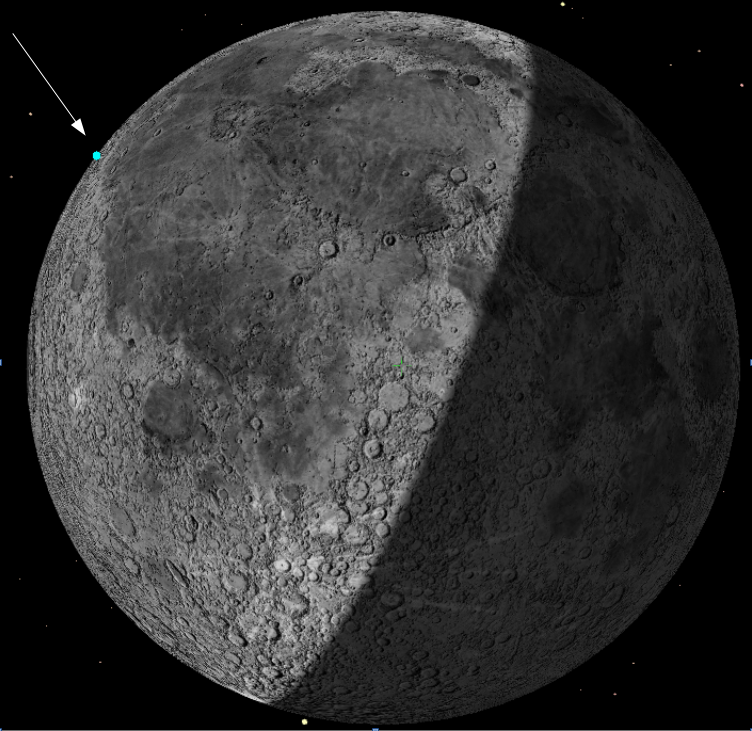
The Moon, our closest celestial neighbor, is constantly bombarded by objects from space. This year, it will face a unique threat: an earthly projectile traveling at seven times the speed of sound. This object, roughly the height of a five-story building, is the upper stage of a Falcon 9 rocket. According to independent astronomer Bill Gray, developer of the Project Pluto software used for tracking near-Earth objects, this rocket stage is expected to collide with the Moon on August 5, 2026, at around 06:44 UTC (02:44 EDT).
Gray’s analysis suggests that the impact will occur near Einstein crater, a heavily impacted region on the border between the Moon's near and far sides. He explains that while the motion of space debris is generally predictable—governed by the gravitational forces of Earth, the Moon, the Sun, and other planets—solar radiation pressure can introduce unpredictable variables.
Solar radiation pressure, though slight, affects objects in space over time, especially when they are tumbling and reflecting light unevenly. This adds complexity to predicting their exact paths.
The Falcon 9 Rocket Stage
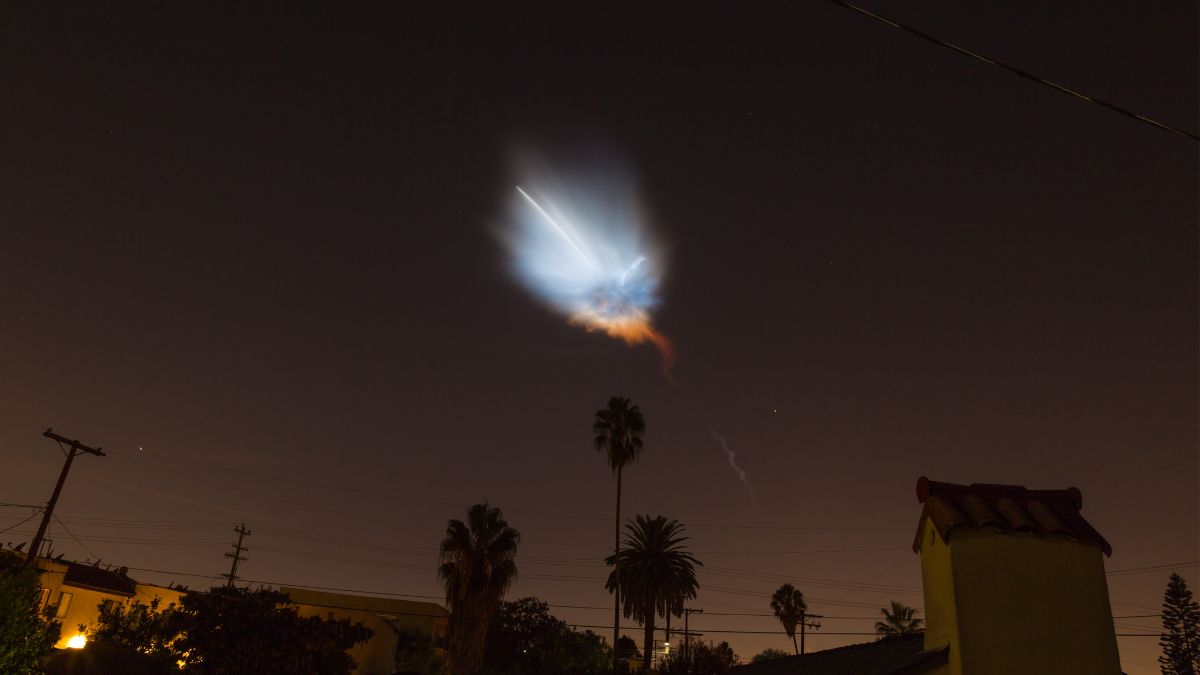
The SpaceX Falcon 9 is a partially reusable rocket, standing 70 meters (230 feet) tall and weighing 550,000 kilograms (1.2 million pounds) at liftoff. Its first stage returns to Earth for reuse, while the second stage remains in orbit. The Moon-bound upper stage in question belongs to the 2025-010D Falcon 9 rocket, which launched in January 2025 and carried payloads such as the Blue Ghost mission 1 and the Hakuto-R Mission 2.
Unlike previous Falcon 9 second stages, which have either fallen back to Earth or entered solar orbits, this one remains in a relatively close orbit around Earth. It takes approximately 26 days to complete an orbit, coming as close as 220,000 kilometers (137,000 miles) and swinging out to about 510,000 kilometers at its farthest point.
This trajectory intersects the Moon's gravitational path, which lies at an average distance of about 400,000 kilometers from Earth. Gray notes that while the Moon and the rocket stage usually pass through their intersection point at different times, gravity will eventually bring them together on August 5.

A History of Lunar Impacts
The Moon has long been a target for human-made impacts. In the 1970s, Apollo modules were deliberately crashed onto the lunar surface to study its composition, creating small "moonquakes." In 2009, NASA's LCROSS probe was sent into the Moon, revealing the presence of water ice and other chemicals.
More recently, in 2022, a Chang'e 5-T1 booster is believed to have struck the Moon's far side, leaving a double-crater formation. The Falcon 9 collision is expected to create a new crater, though the impact itself may not be visible from Earth. The Lunar Reconnaissance Orbiter may later capture images of the aftermath.
Despite the dramatic nature of the event, there is no danger to humans or structures on the Moon. The satellite is already littered with technological debris, including bags of astronaut waste and even a few golf balls and $2 bills.
The Growing Problem of Space Debris
While this specific impact poses no immediate risk, the broader issue of space junk is becoming increasingly concerning. Reckless disposal of rocket stages threatens satellites and could endanger future missions. With upcoming lunar missions like Artemis IV (planned for 2028) and a Chinese mission expected around 2030, the need for responsible space management is urgent.
Gray suggests that the simplest solution is to place upper stages in orbits that take them away from Earth and the Moon, ensuring they end up in solar orbit. While this would prevent immediate collisions, the long-term consequences remain uncertain.
Gray's detailed analysis is available on the Project Pluto website. As we continue to explore space, it's crucial to consider the lasting impact of our actions—not just on the Moon, but on the entire solar system.
