NASA's James Webb Telescope Unveils Most Detailed Cosmic Web Across 13.7 Billion Years
A New Window into the Cosmic Web
Astronomers have unveiled the most detailed map of the universe's cosmic web, offering a groundbreaking view of how galaxies formed and connected over 13.7 billion years. This new map provides an unprecedented glimpse into the large-scale structure of the universe during its earliest stages, allowing researchers to trace galaxy networks back to a time when the universe was just one billion years old.
The cosmic web is a vast network of dark matter and gas that connects galaxies and galaxy clusters across space. These structures are interwoven with massive voids, creating the framework upon which the universe's evolution has unfolded.
The Role of the James Webb Space Telescope
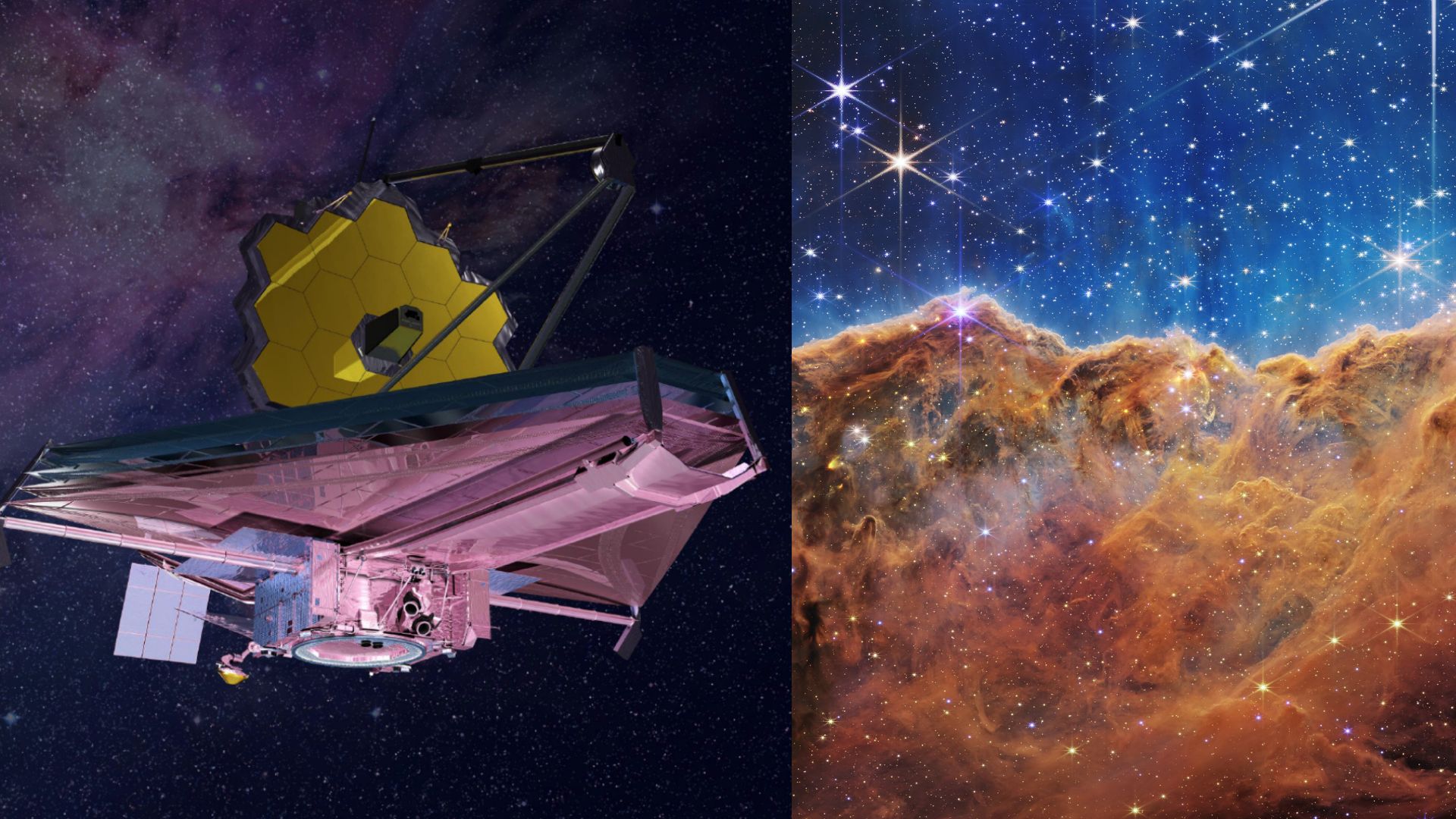
The research, led by scientists from the University of California, Riverside, utilized data from COSMOS-Web, the largest survey conducted so far with NASA’s James Webb Space Telescope (JWST). This project mapped a region of the sky roughly equivalent in size to three full moons, capturing a wide and deep view of the cosmos.
The JWST's infrared instruments enabled astronomers to detect faint galaxies that were previously hidden from older observatories. Additionally, the telescope's advanced capabilities allowed for more precise measurements of galaxy distances, revealing details that were previously unattainable.
Insights from the Cosmic Web
Hossein Hatamnia, a graduate student at UCR and Carnegie Observatories, and the lead author of the study, emphasized the transformative impact of the JWST on our understanding of the universe. He noted that for the first time, scientists can study the evolution of galaxies within cluster and filamentary structures across cosmic time, from when the universe was a billion years old up to the nearby universe—regions within about one billion light-years of Earth.
Comparing JWST with Hubble
Researchers compared the new data with earlier observations from the Hubble Space Telescope. They found that the JWST revealed structures that Hubble could not clearly distinguish. Bahram Mobasher, a distinguished professor of physics and astronomy at UCR, highlighted the significant jump in depth and resolution provided by the JWST.
“Before JWST, we couldn’t see the cosmic web at a time when the universe was only a few hundred million years old,” Mobasher said. “What used to look like a single structure now resolves into many, and details that were smoothed away before are now clearly visible.”
Hatamnia explained that the improvement came from the JWST's ability to identify more faint galaxies in the same area of space. The telescope also placed these galaxies into more accurate slices of cosmic time, enhancing the overall clarity of the map.
Public Access to Cosmic Discoveries
The research team has made the maps and related tools publicly available. Scientists around the world can now access the data, including a catalog containing information on 164,000 galaxies. This public release includes the pipeline used to build the map, the catalog of galaxies and their cosmic density, and a video showing the cosmic web evolving across billions of years.
This initiative marks a significant step forward in collaborative scientific exploration, enabling researchers to build upon this foundational work and uncover new insights into the universe's past and present. The study is published in The Astrophysical Journal.
